
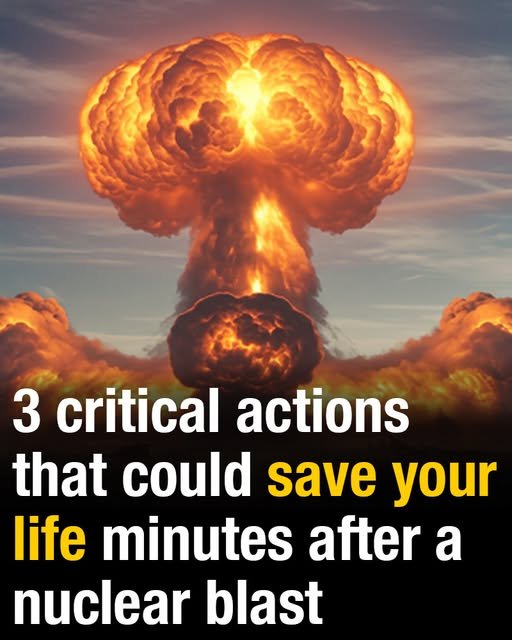
In rare but high-impact emergencies, what matters most is not panic, but clarity. A nuclear event is extremely unlikely, yet knowing a few grounded steps can make a meaningful difference in how safely you respond.
This is not about fear—it’s about being prepared enough to act without hesitation if needed.
1. Avoid Looking at the FlashA nuclear detonation produces an intense burst of light that can cause serious eye injury, even from a distance.
If you notice a sudden, unusually bright flash:
Turn away immediatelyShield your eyes with your hands or an objectDrop down and seek coverWindows are especially dangerous in these moments. The shockwave that follows can shatter glass, turning it into a hazard even indoors.
2. Get to Shelter QuicklyAfter the flash, a powerful shockwave may arrive within seconds.
The priority is simple: put solid barriers between you and the outside.
Move into the nearest sturdy buildingGo to a basement if one is availableIf not, stay in the center of the structure, away from windows and exterior wallsMaterials like concrete, brick, and earth provide better protection. The more layers between you and the outside, the safer you are.
3. Reduce Exposure and Stay InsideOnce you are sheltered, the next phase is about limiting exposure.
Remove outer clothing to reduce contaminationWash exposed skin with clean water if possibleClose windows, doors, and ventilation systemsStay indoors for at least 24 hours, or until authorities confirm it is safe to leave. The period immediately after the event is the most sensitive.
Staying Grounded and InformedIn situations like this, reliable information matters more than speed.
Having basic supplies—water, non-perishable food, a flashlight, and a battery-powered radio—can help you remain steady while waiting for updates.
Follow official guidance from local authorities, and avoid acting on unverified information.
Final ThoughtPreparation is not about expecting the worst.
It’s about reducing uncertainty if something unexpected happens.
When the situation is serious, the most effective response is often simple:
Act quickly.Find shelter.Stay where it’s safe until you’re guided otherwise.
Calm, informed decisions are what carry you through.
Your email address will not be published.Required fields are marked*
Save my name, email, and website in this browser for the next time I comment.










Leave a Reply